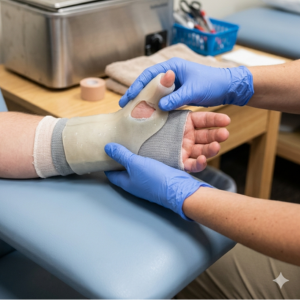

Healthcare continues evolving rapidly; therefore, clinicians increasingly adopt advanced solutions that enhance recovery outcomes while improving overall patient comfort. Among these innovations, thermoplastic splints have become an essential tool for managing injuries and supporting rehabilitation across modern clinical settings.
Understanding Thermoplastic Splints
Thermoplastic splints are custom-designed devices that stabilize injured joints, bones, or tendons while supporting safe and controlled healing processes. Clinicians create these splints using specialized heat-sensitive materials that soften during heating and harden once cooled into a durable shape. Because professionals mould thermoplastic splints directly onto the patient’s limb, they achieve a precise anatomical fit every single time. As a result, patients experience greater comfort and improved support compared with traditional immobilization devices used in earlier treatment methods.
Furthermore, a structured thermoplastic splint service includes assessment, fabrication, fitting, and periodic adjustments to match the patient’s healing progression. Consequently, patients benefit from tailored care that adapts to their changing clinical needs throughout each recovery stage.
Rising Demand for Thermoplastic Splints
The increasing incidence of musculoskeletal ailments, such as sprains and fractures, continues driving the demand for modern immobilization solutions worldwide. As more individuals actively participate in sports, fitness routines, and recreational activities, injury risks naturally increase across all age groups. Therefore, healthcare providers rely heavily on thermoplastic splints to address these rising cases with efficient and patient-friendly treatment approaches. Notably, the private sector reported 937,620 musculoskeletal disorder cases, including 484,620 cases involving days away from work during 2023–2024.
Musculoskeletal disorders, as defined by the U.S. Bureau of Labor Statistics, include painful conditions affecting muscles, connective tissues, and nerves. These disorders often result from injuries, degenerative diseases, or repetitive strain, requiring structured support and rehabilitation strategies. Moreover, professionals use classification systems based on exposure types to guide ergonomic and safety interventions in both workplace and clinical environments. Consequently, thermoplastic splints play a critical role in reducing recovery time, preventing further injury, and improving functional outcomes.
Key Benefits of Thermoplastic Splints
The use of thermoplastic splints is gaining popularity among patients because they provide a balance of comfort, flexibility, and proper support. First, these splints offer a perfect fit that ensures that there are no pressure points while providing proper alignment of the injured area. Additionally, thermoplastic splints are lightweight, which allows patients to perform daily tasks without unnecessary strain or discomfort during extended usage. In contrast, traditional cast materials often feel heavy and restrictive, limiting patient mobility significantly during recovery periods.
Additionally, the thermoplastic splint can be easily modified or remodeled as the swelling reduces or as the healing occurs. This means that patients will not experience frequent replacements but continuous fitting depending on their medical needs. Another significant benefit is that of controlled mobility, whereby unaffected joints remain functional while the injured region stays stabilized. This leads to increased flexibility, minimized stiffness, and more efficient rehabilitation through movement exercises.
Applications Across Healthcare Settings
Clinicians widely use thermoplastic splints in orthopedics, physiotherapy, and rehabilitation programs due to their versatility and effectiveness in treatment planning. For example, these splints help stabilize fractures, support tendon injuries, and protect surgical sites during critical healing phases. In addition, the rehabilitation experts use the thermoplastic splint to assist in gradual movements, which lead to functional mobility while maintaining structural stability. The experts then adjust the splint to allow more movement and strength during recovery.
In the case of neurological rehabilitation, splints made of thermoplastics help stroke victims or those suffering from other nerve-related disorders by helping them retain correct joint positioning. Thus, it helps them avoid complications such as contractures while improving overall limb function. Moreover, these splints are also employed in sports medicine, where they help in treating acute injuries fast and effectively, especially among the physically active population. Therefore, athletes not only recover rapidly but also remain mobile during their rehabilitation process.
Comparing Thermoplastic Splints with Traditional Casts
When comparing treatment methods, thermoplastic splints are superior to plaster casts employed in traditional orthopedic treatments in many ways. The plaster cast provides rigid immobilization; nonetheless, the rigidity often lacks flexibility, comfort, and convenience in maintenance after prolonged use. In contrast, thermoplastic splints are breathable and frequently removable, which allows patients to maintain hygiene and monitor their skin condition regularly. Consequently, patients experience fewer complications related to irritation, infection, or prolonged moisture exposure beneath the device.
In addition, the use of removable thermoplastic splints helps patients to do their therapeutic exercise programs while being guided by professionals without affecting their healing stability. Thus, early mobilization is made possible, ensuring quick recovery. Nevertheless, clinicians continue to assess each case separately as to whether the use of a thermoplastic splint or the traditional cast is best suited for the needs of individual patients. Often, thermoplastic splints offer that perfect compromise between stability, comfort, and flexibility.
Patient Experience and Recovery Outcomes
The patient's experience greatly affects their outcome; thus, the design of thermoplastic splints primarily centers on comfort, utility, and flexibility. These splints are lightweight and ventilated; thus, the patient does not experience pain during prolonged wear periods. Moreover, splints made of thermoplastic that can be removed promote better hygiene habits and facilitate frequent skin checks under the splint. Consequently, patients become more proactive about their therapy and follow care guidelines more effectively. Furthermore, early mobilization plays an important role in ensuring quick recovery, regaining strength, mobility, and function after an injury. In such cases, patients recover faster and enjoy improved quality of life after treatment.
What Lies Ahead
Thermoplastic splints can be seen as a revolutionary development in orthopedic treatments, ensuring personalized treatment, enhanced comfort, and improved outcomes. With an increasing prevalence of musculoskeletal conditions around the world, such products play a progressively more important part in modern medicine. Furthermore, thermoplastic splints empower patients to remain active participants in their recovery journey while benefiting from advanced, patient-centered treatment solutions.