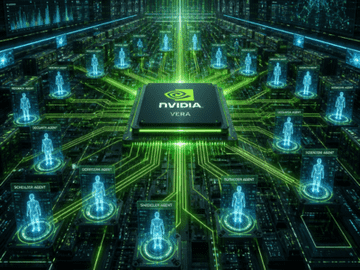

Imagine a corporate world where digital assistants do not just answer questions. They actively write code, manage complex supply chains, and execute multi-step business strategies. This shift toward agentic AI is transforming the corporate landscape. However, running these advanced AI agents requires a completely new level of computing power. Traditional data centers are facing massive bottlenecks because old processors cannot keep up with these heavy tasks. Enter the NVIDIA Vera CPU, a powerhouse processor built from scratch to keep these autonomous systems moving. In this piece, we’ll look at how this chip ditches old x86 limits, slashes lag, and rewrites data center economics. Ready to see how the right hardware unlocks true automation? Let's get into it.
Why NVIDIA Designed a CPU Specifically for AI Agents
For years, graphics chips handled the heavy lifting of AI model training. But as enterprise AI adoption grows, companies are deploying active AI agents that need to think and act in real time. These digital workers invest significant amounts of time running code in sandbox environments and handling data pipelines. This is difficult for conventional processors, causing expensive slowdowns. The solution to this problem comes in the form of the NVIDIA Vera CPU, which dedicates itself entirely to the orchestration involved in AI processing. This specialized focus is triggering an aggressive expansion of the data center accelerator segment across the United States. Major American technology hubs are investing heavily in hardware that can process complex language model infrastructure without breaking the budget. This is due to the trend that demonstrates the bigger strategy of corporations in creating more efficient and scalable artificial intelligence technologies in order to maintain the competitiveness of American businesses within the international market arena. By considering the requirements of digital agents, the processor will help companies tap into the economic potential of automation.
What Makes NVIDIA Vera Different From Traditional x86 Processors
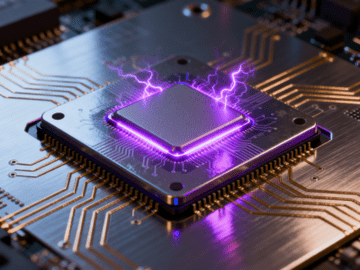
Standard office servers have relied on traditional x86 processors for decades. The older chips, although adequate for simple office applications, are ill-equipped for the requirements of future computing based on AI. The NVIDIA Vera CPU is groundbreaking because it can process tasks 1.8 times faster than typical x86 processors. It is this remarkable increase in processing time that leads to increased efficiency within the data center environment. The secret to this performance lies in its specialized design. The processor features 88 custom Olympus CPU cores and advanced Spatial Multithreading. An additional feature is the inclusion of super-speedy memory architecture with a bandwidth of up to 1.2 terabytes per second. The ability to handle several instructions simultaneously and predict future actions from applications makes this a truly advanced system capable of handling a multitude of tasks. It can be considered the first standard CPU after x86, which is not limited only to server use.
How Vera Supports Agentic AI, Reinforcement Learning, and Data Processing
Running advanced AI reasoning workloads requires a processor that can jump between different tasks instantly. When an AI agent executes code or uses an external tool, it creates a heavy processing load. The unique architecture of the NVIDIA Vera CPU is engineered to handle these intense AI orchestration workloads without slowing down. It allows digital agents to spend less time waiting on background steps and more time generating results. Another strength of the chip is its performance in managing reinforcement learning tasks, which involve an AI model gaining knowledge through constant trial and error. This process needs an extremely high computational capacity to handle thousands of requests simultaneously. By designing an efficient environment for running AI algorithms, the chip makes sure that any software application works seamlessly in an enterprise setting.
The Role of NVIDIA Vera in Next-Generation AI Factories
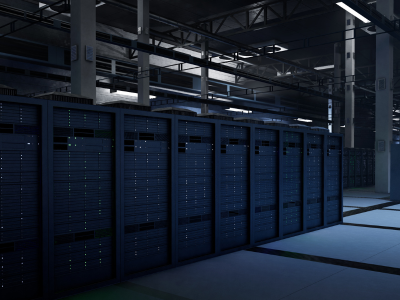
Modern data centers are rapidly evolving into highly specialized AI factories. These facilities do not just store information; they actively produce digital tokens and automated intelligence. The NVIDIA Vera CPU sits at the absolute center of this data center modernization trend. It provides the high-performance computing foundation required to keep expensive graphics hardware running at maximum speed. The testing of the processor on its own proves that it offers the best performance in terms of compiling code and handling databases. Such functions lie at the center of the process of automating everyday activities. The processor, by eliminating typical data blocks, enables the factory to produce its maximum everyday output. This means that large corporations will be able to scale up without having any slowdown issues.
NVIDIA Vera and Rubin: Building a Unified AI Infrastructure
A truly efficient enterprise AI system requires perfect harmony between the main processor and the graphics accelerators. The NVIDIA Vera CPU achieves this by serving as the core host processor for upcoming NVIDIA Rubin platforms. This integration relies on second-generation NVLink-C2C technology to create a super-fast connection between components. This advanced link provides up to 1.8 terabytes per second of shared bandwidth between the chips. It allows data to flow back and forth instantly, eliminating traditional communication delays. By building this tightly coupled AI accelerator ecosystem, companies can drastically improve their end-to-end performance. It also extends advanced security protections across the entire server rack to keep sensitive corporate data completely safe.
How AI Agents Are Changing Data Center Economics
The financial metrics for running a modern data center are shifting rapidly. For years, executive teams measured success based on raw processing cores per dollar. Today, the focus has shifted entirely toward token revenue generation and token cost efficiency. The faster a system can process digital words, the more profitable the enterprise becomes. This economic shift makes energy-efficient processors essential for large-scale operations. High electricity bills and massive cooling demands can quickly ruin the financial return of an automation project. The efficient design of the NVIDIA Vera CPU helps operators lower their daily power consumption while maintaining incredible speeds. This smart balance optimizes overall AI factory economics, making large-scale cloud AI deployments financially sustainable for the long haul.
Major AI Companies and Cloud Providers Backing NVIDIA Vera
The world’s leading technology pioneers are already moving quickly to adopt this new processor architecture. Major global AI labs like OpenAI, Anthropic, and SpaceXAI are actively evaluating the chip to scale their heavy agentic workloads. At the same time, leading cloud service providers like Oracle Cloud Infrastructure, CoreWeave, and ByteDance are planning major deployments. The hardware manufacturing ecosystem is supporting this launch with equal enthusiasm. Trusted infrastructure providers like Dell Technologies, HPE, Lenovo, and Supermicro are building standalone server platforms using the new chip. This widespread industry backing ensures that enterprise buyers will have immediate access to flexible, air-cooled, or liquid-cooled options this fall.
Enterprise Benefits of Deploying Vera-Powered AI Systems
Investing in a dedicated CPU for AI agents brings a wide range of immediate practical advantages to the corporate world. The most noticeable benefit is a massive drop in system latency, meaning digital tools respond to customer requests almost instantly. For example, financial platforms like the New York Stock Exchange are looking at these chips to process more than a trillion daily messages smoothly. Deploying these systems results in significantly higher throughput by processing more automated tasks per second to maximize daily token revenue. Furthermore, companies experience much lower operating costs by reducing power consumption across large-scale server arrays to protect corporate profit margins. Finally, organizations benefit from stronger security that protects sensitive corporate data at the hardware level using advanced confidential computing tools. These clear advantages allow companies to deploy advanced business automation tools safely without risking their financial stability or data privacy.
The Importance of CPU-GPU Integration in Modern AI Workloads
Many people assume that modern artificial intelligence only requires powerful graphics chips to succeed. In reality, the main processor handles critical coordination tasks that keep the entire system alive. Without a strong CPU-GPU integration strategy, advanced graphics cards spend valuable time sitting idle, waiting for data to arrive. The unified architecture of the NVIDIA Vera platform eliminates this structural waste. Pairing advanced processing cores with high-speed networking and storage tools, it creates a perfectly balanced system. This comprehensive approach ensures that hyperscalers' AI infrastructure can handle intense training and high-throughput inference tasks simultaneously. It allows companies to get the absolute most value out of their total technology investments.
What NVIDIA Vera Means for the Future of Enterprise AI
The arrival of this new processing class marks the beginning of a brand-new era for corporate technology. The limitations of traditional, general-purpose computer chips no longer restrict businesses. By anchoring your corporate technology roadmap around the innovative NVIDIA Vera CPU today, your business can embrace the autonomous future with total confidence. The historical era of relying on slow, outdated server setups to handle complex automated reasoning is drawing to a close. This transition clears a smooth path for highly intelligent, scalable systems that will safely run the next generation of global commerce.