
The global race for computational supremacy has officially entered a high-velocity chapter. Intel recently announced a monumental partnership to join the Terafab AI chip project, a massive complex spearheaded by Elon Musk. This collaboration brings together the engineering prowess of SpaceX, Tesla, and Intel to build the physical foundation of future intelligence. By merging cutting-edge fabrication with ambitious robotics goals, this project aims to solve the world's growing hunger for specialized silicon.
In this blog, we uncover the technical leap toward next-generation fabrication and the emergence of specialized silicon for a world defined by autonomous machines. But the real question is, what does the Terafab AI chip project signal for the future of the global semiconductor hierarchy?
How Intel joins Elon Musk’s Terafab AI chip project
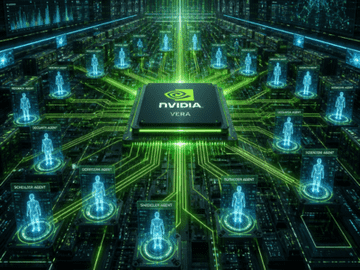
Intel's decision to partner on the Terafab AI chip project marks a pivotal moment for the legendary chipmaker. CEO Lip-Bu Tan recently hosted Musk to finalize a strategy that integrates Intel AI chips expertise into the Terafab ecosystem. This project is not just another factory; it is a specialized complex designed to produce a staggering amount of compute power. Intel provides the technical maturity needed to scale such a massive undertaking quickly. By aligning with Musk’s vision, Intel secures a massive customer for its evolving manufacturing services. This partnership highlights a shared belief that the next generation of innovation requires radical collaboration.
What Terafab means for next-gen AI chip manufacturing
The domestic technology sector is currently witnessing a massive wave of enterprise adoption regarding generative artificial intelligence across diverse industries. Market leaders are prioritizing a strategy that embeds advanced intelligence directly into core operational workflows to drive domestic efficiency and industrial innovation. This trend highlights a broader transition toward a highly interconnected digital economy where AI semiconductor manufacturing serves as the primary engine for sustained growth. By integrating these sophisticated tools, organizations are enhancing their decision-making capabilities and streamlining complex processes.
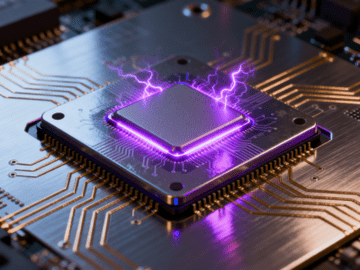
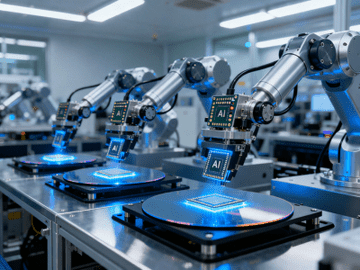
Terafab represents a step change in next-gen chip fabrication and packaging. The goal is to produce one terawatt of compute per year, an unprecedented figure in the industry. This requires a complete reimagining of how logic and memory are built together. Traditional methods are often too slow to meet the demands of modern scaling. Terafab aims to eliminate these bottlenecks by creating a localized, high-efficiency production loop. It is a blueprint for the future of high-output industrial silicon.
How Tesla and SpaceX are building AI chip infrastructure
The Tesla AI chip factory in Austin is becoming the heart of this new infrastructure. Musk has envisioned two distinct facilities: one focused on terrestrial needs and another for the stars. The SpaceX AI infrastructure will specifically target data centers designed for orbital operations. This dual-path approach ensures that intelligence can scale regardless of the environment. Tesla’s focus remains on the high-speed processing required for autonomous systems. Meanwhile, SpaceX is preparing for a future where off-planet data processing is a standard requirement. Together, they are building a vertical stack that covers everything from Earth-bound transport to deep-space exploration.
Why humanoid robots and AI data centers need custom silicon
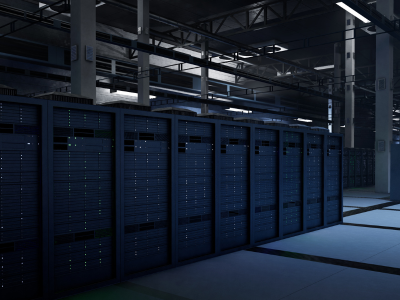
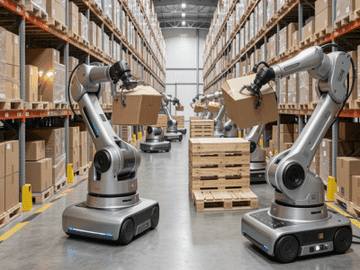
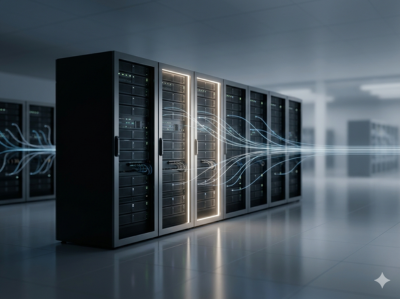
Generic processors are no longer sufficient for the specialized needs of modern robotics. Humanoid robot chips must handle complex sensory inputs and motor controls in real-time with extreme efficiency. Similarly, AI data center processors are being pushed to their limits by massive model training requirements. Custom silicon allows for optimization that off-the-shelf parts simply cannot match. This move toward specialized hardware is essential for achieving the fluidity needed in humanoid movements. It also ensures that data centers can handle trillions of data points without excessive energy consumption. Customization is the only way to maintain the pace of AI compute scaling.
How Intel’s foundry strategy supports large-scale AI projects
The Intel foundry business is the cornerstone of the company’s massive turnaround effort. By opening its doors to external customers like Tesla and SpaceX, Intel is positioning itself as a global leader in contract manufacturing. A key part of this success is the 18A process technology, which offers the precision required for advanced AI logic. This strategy allows Intel to utilize its massive footprint to support the world’s most ambitious projects. While the foundry segment has faced financial hurdles, high-profile partnerships provide the volume needed for recovery. Intel is proving it can be the manufacturing backbone for the industry’s most innovative thinkers.
Why Terafab could reshape semiconductor manufacturing models
Terafab is more than a factory; it is a new philosophy for silicon manufacturing innovation. It challenges the traditional separation between chip designers and the facilities that build them. By bringing design, fabrication, and final application under one umbrella, the project reduces latency and cost. This integrated model allows for rapid prototyping and immediate feedback loops. It reflects a shift toward a software-defined hardware approach where the factory is as agile as the code it supports. This could lead to a future where specialized chips are produced in weeks rather than months.
How U.S. AI chip investments are accelerating domestic production
The U.S. semiconductor investments reaching the market today are part of a broader effort to secure the national supply chain. Federal support and private capital are converging to ensure that the most advanced chips are made on American soil. This influx of resources is critical for maintaining a competitive edge in the AI chip competition Nvidia currently leads. By building domestic capacity, the U.S. reduces its reliance on complex global logistics. Projects like Terafab are the direct result of this renewed focus on industrial self-sufficiency. It ensures that the digital backbone of the country remains secure and resilient.
What this partnership means for Intel’s AI comeback strategy
For Intel, joining the Elon Musk Terafab project is a major win for its corporate reputation. After lagging behind rivals in recent years, the company is now at the center of the most discussed project in the world. This partnership validates Intel's technical roadmap and its ability to handle massive scale. It provides a clear path to profitability for the foundry division and boosts investor confidence. By supporting the robotics and data center goals of a high-profile visionary, Intel is reclaiming its spot as a tech leader. This is an essential step in its journey to define the next era of computing.
Long-term outlook for AI chips, robotics, and data center growth
The future of robotics AI hardware is intrinsically tied to the success of localized manufacturing. As AI models move from screens into physical machines, the demand for power-efficient, high-speed silicon will only grow. We are entering a decade where intelligence is a physical utility, much like electricity. Data centers will continue to expand, becoming the central nervous system of the global economy. The Terafab AI chip project is just the beginning of this new industrial revolution. It sets a standard for how we will build the machines that will eventually build our future.