
Meta Platforms announced a $21 billion agreement with CoreWeave this week, expanding its partnership to secure long-term cloud computing capacity. The deal underscores Meta’s commitment to advancing artificial intelligence and reflects continued demand for advanced AI infrastructure.
Meta confirmed the new deal extends through December 2032. This agreement adds to a $14.2 billion contract signed in September last year. Together, the deals place Meta among CoreWeave’s largest customers. Investors reacted positively, with shares of both companies rising after the announcement. The deal reflects Meta’s determination to close gaps with AI rivals.
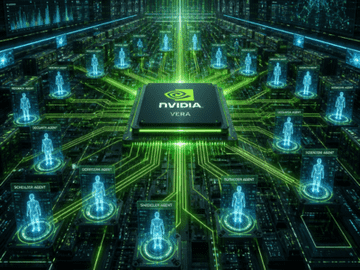
The partnership gives Meta early access to Nvidia’s next-generation Vera Rubin chips. These chips are expected to deliver double the performance of Nvidia’s current Blackwell platform. This advantage could help Meta handle heavier AI workloads. Faster processing supports the training and deployment of large language models. It may also improve AI reasoning and speed across Meta products.
CoreWeave is now a key neocloud provider, specializing in cloud GPU services for high-performance computing. As it works closely with Nvidia, CoreWeave can access leading AI hardware. This is valuable as tech companies compete for chips, and the deal helps Meta get these hard-to-find resources. Over the past year, Meta Platforms has quickly grown its AI infrastructure. The company plans to invest up to $135 billion in AI by 2026, which is much more than its recent ad revenue growth. Meta thinks that spending heavily now will help future products, aiming to lead in artificial general intelligence.
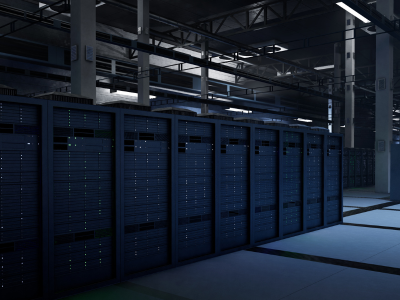
The timing of this deal is important. Meta recently introduced Muse Spark, its first AI model from a new superintelligence team formed after earlier Llama 4 models did not meet expectations. While Muse Spark looks promising, Meta admits it needs better computing power, which the CoreWeave agreement will help provide. CoreWeave also announced its own large expansion plans. The company expects to spend as much as $35 billion in capital expenditure this year. That figure marks a sharp jump from 2025 spending. Much of this investment will go into AI data centers. These centers will host advanced chips and support rising AI compute demand.
Meanwhile, the cloud computing market is growing quickly. Companies are choosing flexible providers that focus on AI scalability, which benefits neocloud firms like CoreWeave. These companies target specialized AI workloads instead of general services, and as demand rises, partnerships with big players help drive their growth. CoreWeave depends on a few major customers, with Microsoft making up most of its revenue last year. Now, Meta is also one of its top clients. This diversification could help steady CoreWeave’s growth. The company has also announced new bond offerings to support more expansion.
For Meta, the AI cloud partnership supports long-term planning. The company needs large volumes of compute to train new models. AI workloads increase as systems grow in size and complexity. Reliable access to hardware allows Meta to scale faster. This advantage could be crucial in the ongoing AI race. This agreement also boosts Meta’s competition with Google, OpenAI, and Anthropic, as all these companies are racing to build better AI models. Access to the latest chips is crucial for performance, and Meta hopes the Vera Rubin chips will help close the gap. Faster training could speed up innovation across Meta’s platforms.
In the United States, the impact may extend beyond the companies involved. Increased investment in AI data centers can boost local infrastructure and jobs. The deal supports domestic leadership in AI computing capacity. U.S.-based cloud resources remain vital for national tech competitiveness. Consumers might notice some indirect benefits. Better AI systems could improve services on Facebook, Instagram, and WhatsApp. Features for content creation, advice, and personalization may get better. Faster models make these experiences more responsive and useful.
Despite optimism, there are still risks. Spending on AI infrastructure is expensive, and the returns are not guaranteed. Continued growth in demand is needed to make these big investments worthwhile. Meta’s leaders think that investing early gives them a long-term advantage. The CoreWeave deal shows they are confident in this approach. Ultimately, the Meta CoreWeave AI cloud deal underscores how central infrastructure has become. AI innovation depends on chips, data centers, and partnerships. With this move, Meta significantly increases its computing firepower. The race for AI leadership now enters a new and more capital-intensive phase.