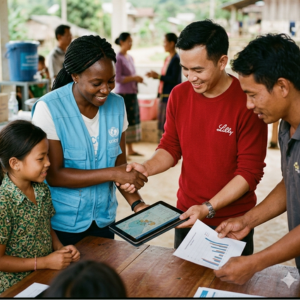

A major global collaboration has launched to improve non-communicable disease prevention and treatment for children. The six-year initiative aims to reach more than 30 million children, adolescents, and caregivers across 21 low- and middle-income countries.
The program marks an important expansion of global efforts addressing childhood non-communicable disease challenges. A $50 million commitment will strengthen healthcare systems and improve early diagnosis, treatment access, and long-term disease management. The initiative will continue through 2032 and focus on sustainable healthcare improvements.
The main focus is on diseases affecting children, such as diabetes, congenital heart disease, respiratory problems, sickle cell disease, obesity, and overweight. Health professionals have realized that non-communicable diseases pose major threats to children and adolescents globally, particularly within underserved communities. According to the announcement, governments will receive support in integrating non-communicable disease prevention and treatment into primary healthcare services. Additionally, healthcare workers will receive training while screening programs and referral systems improve within local communities.
The partnership arrives as global health organizations report increased incidences of chronic diseases among children. Developing nations represent about 82% of deaths from complications arising from non-communicable disease-related conditions. Lack of access to healthcare, poor nutrition, and early screening continue to worsen outcomes for vulnerable populations.
According to the NIHCM Foundation, chronic diseases remain the leading cause of illness, death, and disability in the United States, affecting more than half of the population. Approximately six in ten Americans currently live with at least one chronic disease, creating significant health and economic burdens nationwide. Furthermore, nearly 90% of the $4.5 trillion spent on U.S. healthcare during 2022 supported patients experiencing chronic physical and mental health conditions.
Healthcare leaders believe the new initiative could improve healthcare access for millions of families lacking consistent medical support. Through stronger health systems, children living with non-communicable disease conditions may receive earlier diagnoses and more effective treatment throughout their lives. A senior global health executive stated that many children lack essential foundations for lifelong health because non-communicable disease risks begin early in life. The executive added that private sector collaboration can improve healthcare outcomes at scale through long-term investment and community partnerships.
According to another healthcare executive, children deserve a healthier future ahead. According to this executive, the development of healthcare systems is crucial in preventing the swift rise in non-communicable disease conditions globally. The initiative also builds upon earlier collaboration efforts launched during 2022. Previous healthcare programs reportedly reached nearly 16 million children and caregivers through essential healthcare services, awareness campaigns, and health system improvements.
Earlier projects focused on countries including Bangladesh, Malawi, Nepal, the Philippines, Zimbabwe, and India. These programs improved childhood non-communicable disease care by training healthcare providers, strengthening disease monitoring systems, and expanding preventive health education. Health practitioners have noted that child non-communicable diseases continue to be neglected in mainstream medical practice. Traditionally, a number of health care programs have focused on infectious diseases rather than investing adequately in the prevention and treatment of chronic diseases in some developing countries.
As a result, many children still suffer from undiagnosed illnesses, making proper treatment impossible. It is believed that an efficient health care system in the community will greatly enhance the survival rate and quality of life of the affected children. The expanded collaboration also aligns with broader healthcare access initiatives focused on improving medical support within resource-limited settings by 2030. Healthcare organizations increasingly prioritize sustainable disease prevention programs alongside long-term treatment access strategies.
According to industry analysts, this collaboration indicates increased global concern towards the prevention of childhood non-communicable diseases. Increasing numbers of governments, healthcare providers, and pharmaceutical firms recognize the advantages of early interventions because they can prevent complications and financial costs related to chronic diseases.
With healthcare systems adapting to chronic diseases, such alliances will play a vital role in improving access to these life-saving treatments for disadvantaged children around the world. Increased investment in prevention programs, as well as workforce training and community disease management, is also expected in the coming years.