
Chest sensor innovation is rapidly reshaping respiratory monitoring, as healthcare providers increasingly adopt wearable technologies to improve patient outcomes and efficiency. A new generation of chest sensor devices, inspired by traditional stethoscopes, is delivering continuous, real-time lung data beyond hospitals, marking a major shift in pulmonary care.
Growing Burden of Respiratory Diseases
Respiratory diseases affect millions of people in the United States, creating an urgent need for improved monitoring, prevention, and treatment solutions. Therefore, healthcare systems are prioritizing advanced technologies such as chest sensor devices to address chronic respiratory conditions more effectively. About 25 million people in the United States have asthma, which requires continuous management to prevent severe complications and hospital visits. Meanwhile, more than 16 million individuals live with chronic obstructive pulmonary disease, a leading cause of death worldwide.
Consequently, strategies such as reducing environmental triggers, improving medication adherence, lowering air pollution, and promoting smoking cessation remain essential interventions. However, continuous monitoring enabled by chest sensor technology can significantly enhance these preventive measures and improve patient outcomes.
From Stethoscope to Chest-Sensor Innovation
For more than two centuries, clinicians have relied on stethoscopes to evaluate lung health during short patient visits. However, this episodic approach limits visibility into ongoing respiratory conditions, especially between appointments. In contrast, the chest sensor continually records lung acoustics, allowing doctors to monitor any minute alterations in the breathing pattern of patients. Thus, the transition from the stethoscope to the chest sensor is indeed a complete paradigm shift in respiratory monitoring practices.
Engineers designed modern chest sensor systems by replicating core acoustic properties of the stethoscope, such as sound pickup and amplification using diaphragms. Furthermore, they include digital filtering mechanisms to eliminate noise and increase signal accuracy in real-world conditions. As a result, the chest sensor produces recordings that closely match traditional auscultation while delivering consistent, reliable, and high-quality respiratory data continuously.
Real-Time Data with Chest Sensor Systems
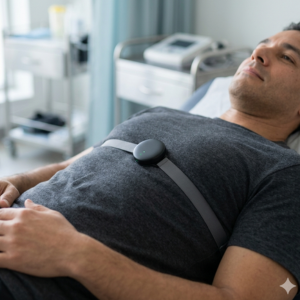
Unlike conventional tools, a chest sensor continuously records lung sounds such as wheezing, coughing, and crackles during everyday activities. Meanwhile, the device securely transmits this data to cloud platforms, where advanced algorithms analyze respiratory trends and detect abnormalities. Therefore, physicians are able to have a holistic view of the patient’s health rather than depending only on limited visits to the hospital or subjective complaints. Early diagnosis using these systems may reduce the need for patients to visit the hospitals, hence improving disease management. Also, chest sensor systems make remote patient monitoring possible, thus effectively filling the void that exists between hospital-based treatment and home-based recuperation. Hence, health professionals can monitor disease progression and modify treatments accordingly.
Enhancing Accuracy and Clinical Decision-Making
The chest sensor improves diagnostic accuracy by capturing objective, high-frequency respiratory data that traditional methods often fail to detect. Furthermore, machine learning algorithms analyze these data to identify patterns associated with worsening conditions or emerging symptoms.
For instance, chest sensors can monitor all respiratory incidents, such as coughing and wheezing, and even record them at exact times, making proper clinical evaluation possible. As a result, clinicians can make more informed decisions, particularly for chronic diseases such as asthma and chronic obstructive pulmonary disease (COPD). In addition, research has proved that wearable biosensors can help in detecting abnormal breaths far more often than when evaluated periodically. Therefore, early detection ensures timely action, preventing any serious issues.
Expanding Role in Clinical Trials
Chest sensors are increasingly used in research studies in order to have precise and objective data. In traditional research, patients were asked to describe their symptoms, which could potentially lead to biased conclusions and a lack of data accuracy. However, chest sensor devices help to monitor patients in the real world and receive continuous information on their breathing patterns and response to drugs. Consequently, researchers can evaluate therapies more accurately and enhance the reliability of clinical endpoints. Moreover, chest sensor systems allow the collection of valuable data about cough and lung sounds. Hence, this provides additional benefits for improving the process of developing new drugs and studying disease progression.
Patient-Centered Chest Sensor Design
An additional benefit of the chest sensor technology is that the design focuses on patient comfort and ease of use. These devices are often compact, wireless, and non-invasive, thus making them ideal for regular daily wear. As this chest sensor works passively, there will be no interference with daily activities as far as gathering vital medical data is concerned. Consequently, compliance levels stay high all the time, resulting in accurate data being collected continuously. Moreover, chest sensor systems help lessen the requirement to visit the hospital often; thus, respiratory therapy becomes more convenient for patients with chronic illnesses.
Future Outlook for Chest Sensor Technology
Looking ahead, experts expect chest sensor adoption to increase in hospitals, clinics, and home care environments around the world. With the shift toward preventive medicine, the use of continuous monitoring devices will become increasingly essential. At the same time, ongoing studies are evaluating how chest sensors can be used to predict disease flare-ups before the situation becomes serious or even life-threatening. Initial results indicate that using constant monitoring could drastically increase the chances of successful intervention strategies. Consequently, chest sensor technology can revolutionize respiratory therapy by providing proactive medical care, lessening hospital admissions, and enhancing the quality of life for the patient.
The progression from standard stethoscopes to sophisticated chest sensors signifies significant developments within the realm of respiratory health management. With a combination of wearable technology, acoustic principles, and data analysis, chest sensors provide real-time information. With its increasing popularity, chest sensor technology is expected to set new standards within the healthcare sector through enhanced accuracy and efficient workflows globally.