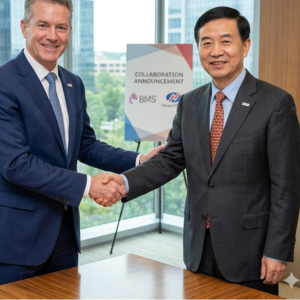

Bristol Myers Squibb (BMS) and Hengrui Pharma announced a global partnership to speed up the discovery and development of new medicines in oncology, hematology, and immunology. This partnership has two research-focused organizations that have complementary strengths and a common goal of tackling some of the world's major medical challenges. Chronic diseases continue to strain healthcare systems, particularly in the United States, where about 129 million people have serious chronic conditions such as cancer, diabetes, or hypertension. The demand for quicker and more effective treatment innovation has become very pressing.
The partnership focuses on a portfolio of 13 early-stage programs that target illnesses with significant unmet medical needs. The agreement shows that both companies have contributed equally. BMS is providing four programs in immunology, while Hengrui is contributing four programs in hematology and cancer. Additionally, both institutions will collaborate to find and develop five new experimental medicines, using shared expertise and scientific platforms to create new treatment strategies.
The partnership seeks to tackle immune-mediated diseases, cancers, and blood diseases. These conditions are closely associated with the rising number of chronic diseases, which pose scientific challenges. Five of the ten leading causes of mortality in the US are preventable or strongly associated with chronic diseases. This highlights the importance of continued funding for new treatments. Hence, the business model employed by the BMS-Hengrui partnership aligns with global health concerns, particularly in areas with high mortality and medical expenses due to chronic diseases.
The global nature of the partnership seeks to give both companies an opportunity to leverage their strengths in different geographical regions. In all regions except the mainland Chinese territories, Hong Kong, and Macau, BMS would exclusively sell the products of Hengrui globally. Similarly, Hengrui would have exclusive rights to sell products developed by BMS in these territories. It enables each company to work in areas where it has built infrastructure, knows the regulations, and has market reach.
Another key factor in the agreement is Hengrui's role in early clinical development. The company will manage proof-of-concept studies and initial clinical trials for the 13 programs. This is crucial in today's pharmaceutical industry, where reducing development times can greatly influence clinical outcomes and commercial success. Quick validation in early stages helps companies identify effective treatments sooner, use resources more efficiently, and ultimately deliver medications to patients more quickly. Their partnership also looks ahead to greater integration, with Hengrui possibly working with BMS on some programs and participating in global commercialization efforts.
Strategically, the deal is a reflection of larger trends that are changing the pharmaceutical sector. To gain access to new technologies, diversify pipelines, and increase development efficiency, businesses are increasingly seeking cross-border partnerships. This change is demonstrated by the BMS–Hengrui collaboration, which combines regional innovative skills with global scale. Hengrui provides strong discovery capabilities and effective early-stage research execution, while BMS brings its vast experience in large-scale clinical development, regulatory strategy, and commercialization.
This partnership highlights the importance of international collaborations against complex diseases that need significant funding and multidisciplinary approaches. As chronic diseases continue to rise globally, particularly in aging populations, the demand for innovative treatments is expected to increase significantly. These collaborations enhance scientific progress and increase the chances of a major leap forward in medical treatment.
The success of the BMS-Hengrui partnership will be determined by the progress of the early-stage programs and the ability of the two companies to translate scientific research into medicines that benefit patients. The scope of the agreement and the strategic alignment between the two organizations provide a strong foundation for long-term impact, even though all 13 programs are still in the early stages of development. Millions of patients who continue to depend on advances in medical innovation may find new hope if the partnership is successful in addressing the rising global burden of chronic diseases.