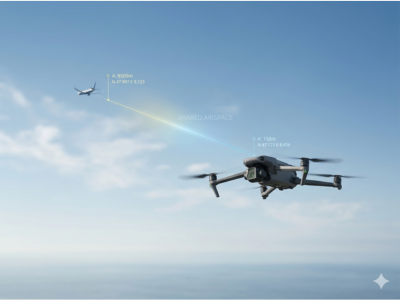

The sky is getting busier every day, and the old ways of keeping track of what is flying above us are changing fast. For a long time, traditional airplanes and new-age drones lived in two different worlds, rarely sharing the same data. However, a new era of shared airspace awareness is finally arriving, making our skies safer for everyone. By connecting these two worlds, we are moving away from a blind flying system toward one where every pilot, whether they are sitting in a cockpit or holding a remote control, can see exactly where everyone else is. This is not just a cool tech update; it is a vital step in ensuring that as more robots take to the air, they do so without getting in the way of human-piloted aircraft.
Shared Airspace Awareness Enters a New Phase
The Air Traffic Management adoption in the United States is currently moving toward a strategy of digital-first integration to handle the massive surge in diverse flying vehicles. This trend highlights a major expansion where U.S. market leaders are shifting away from manual monitoring toward automated drone traffic management systems that can process thousands of data points at once. This shift aligns with the FAA’s transition toward digital airspace management, where automated data exchange and network‑based coordination replace manual monitoring as the foundation for managing mixed traffic in low‑altitude airspace.
As a result of early regulatory progress and rapid technology adoption, the US accounts for the largest share of the global market in shared airspace awareness and digital air traffic management solutions. By creating an advanced digital skies infrastructure, domestic aviation agencies have ensured that crewed and unmanned aircraft flights can co-exist safely within the same airspace. Modernizing the process of aviation management in such a manner will play a critical role in maintaining safety as the skies become increasingly crowded.
SiFly Partners With ADS-B Exchange for Real-Time Integration
A massive leap forward occurred recently with the partnership between SiFly and ADS-B Exchange drone enthusiasts. ADS-B Exchange is famous for having the world's largest co-op of unfiltered flight data, and by teaming up with SiFly, that data is now being combined with real-time drone telemetry. ADS‑B already serves as the FAA’s primary surveillance technology for crewed aviation, designed to give pilots and operators a real‑time view of surrounding traffic. Extending visibility to include drones, without burdening air traffic controllers, directly supports the FAA’s broader goal of enhanced situational awareness in shared airspace.
This means that for the first time, drone positions are being shown right alongside traditional planes in a single, unified view. This kind of drone airspace integration is exactly what the industry has been waiting for. It takes the guesswork out of flying by providing a clear and honest picture of what is happening in the air at any given moment, allowing for much better coordination between different types of flyers.
Q12 Drones Gain Visibility in Live Airspace Systems
The focus of this integration is the SiFly Q12, one of the most advanced unmanned aircraft systems available for commercial use. The FAA has documented rapid growth in Beyond Visual Line of Sight (BVLOS) drone approvals in recent years, noting that longer‑range and longer‑duration missions require new approaches to airspace visibility beyond traditional see‑and‑avoid practices.
With the ability to input the flight pattern of the Q12 in real-time in the system, the drone is not an unseen craft in the airspace anymore. The visibility solution offered by the technology will ensure that even the local aviation authorities, along with all other pilots, are aware of the presence of the drone in the air. It is a major win for transparency, as it proves that drones can be responsible neighbors in the sky. When a Q12 is in the air, its data is being shared openly, creating a layer of trust that is essential for the widespread use of cloud-connected drones in our communities.
Bridging Crewed and Uncrewed Aviation Data
One of the biggest challenges in modern flight is getting different systems to talk to each other. Pilots of small planes often have no way of knowing if a drone is operating nearby, and drone pilots often lack a full view of traditional air traffic. By bridging crewed and uncrewed aviation data, SiFly is solving this communication gap. This integration creates a shared language for the sky, where aviation safety technology works for everyone equally. Whether it is a rescue helicopter or a delivery drone, having everyone on the same map reduces the risk of close calls and makes the entire system more resilient. It is a practical solution that puts safety at the heart of every flight.
Cloud-Connected Architecture Enables Scalable BVLOS Operations
For drones to truly become useful for things like long-distance delivery or pipeline inspection, they need to fly Beyond Visual Line of Sight, or BVLOS drone operations. To do this safely, a pilot needs to know what is happening miles away. SiFly’s cloud-connected drones use a high-tech architecture to send data instantly across the internet, allowing for safe long-distance travel. This setup is the backbone of drone traffic management, as it allows multiple drones to be managed from a central location. It provides the scalability needed for businesses to grow their drone fleets while staying firmly within the safety guidelines required for complex operations in shared spaces.
Real-Time Telemetry Powers Unified Airspace Picture
The key ingredient behind this technology is drone telemetry. Simply put, telemetry refers to the flow of data from the drone regarding its altitude, velocity, and coordinates. The availability of consistent and instantaneous telemetry results in a synchronized picture of the airspace, down to the very minute. This is a key part of aviation safety technology, as it allows for instant alerts if two aircraft are getting too close. By making this data available to everyone through platforms like ADS-B Exchange, we are creating a more transparent and safer sky where information is shared freely to prevent accidents before they happen.
Advancing Safe Integration of Unmanned Aircraft Systems
We are currently seeing a massive push to follow new FAA Part 108 drone rules, which are being designed to make the integration of unmanned aircraft systems official and permanent. SiFly’s efforts are a direct response to these evolving regulations, showing that the industry is ready to step up and meet high safety standards. By proving that drones can play nicely with others, they are paving the way for more advanced uses of the technology, such as urban air mobility and automated shipping. This work is about more than just one company; it is about advancing the entire field of aviation into the 21st century with a focus on harmony and safety.
A Step Toward Digital and Transparent Airspace Management
Looking toward the future, the move to a digital airspace infrastructure is inevitable. With the FAA modernizing the National Airspace System through digital air traffic management, unmanned traffic management systems, and performance-based BVLOS regulations, real-time airspace integration represents a tangible step towards realizing the vision of a transparent airspace system.
The partnership between SiFly and ADS-B Exchange is a perfect example of how this future will look: open, data-driven, and highly transparent. As we move away from old-school radar and toward airspace visibility solutions that live in the cloud, the sky will become a more organized and predictable place. This transparency is the key to winning public trust and ensuring that drones can provide all their amazing benefits, like faster deliveries and better emergency responses, without compromising the safety of the traditional pilots who have owned the skies for over a century.