
Lockheed Martin successfully launched a GPS III satellite early Tuesday, boosting the strength and accuracy of global navigation services for both military and civilian users worldwide. With this Lockheed Martin GPS III satellite launch, the US Space Force completed deployment of the GPS III series. The mission also prepares the shift toward the next‑generation GPS IIIF spacecraft.
The satellite, known as GPS III SV10, lifted off from Cape Canaveral Space Force Station before sunrise. Lockheed Martin built the spacecraft and delivered it on a faster schedule. After launch, teams confirmed early signal acquisition. Operators now manage the satellite through Lockheed Martin’s Denver control center.
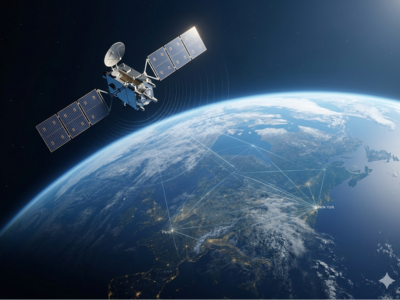
SV10 brings higher accuracy and resilience to the space-based navigation system. The satellite includes an optical crosslink test payload. This feature allows satellites to communicate directly with each other. As a result, the GPS constellation gains stronger network connectivity in orbit. The optical crosslinks contribute to the resilience of the space architecture. They reduce the need for using the ground relays during interruptions. Thus, such a system will be more resistant to interference in times of war.
GPS III satellites offer three times greater accuracy than earlier models. They also deliver much stronger anti-jamming GPS technology. Secure GPS signals, M‑Code helps warfighters operate in difficult environments. Civilian GPS applications also gain better precision for daily navigation. This launch marked the fourth GPS mission completed on a faster schedule. Lockheed Martin and the US Space Force aimed to speed delivery of space mission operations. Consequently, the constellation reached its strongest level so far.
Furthermore, SV10 has an advanced Rubidium atomic clock too. Atomic clock satellite technology provides better time precision. Time precision remains critical for PNT applications. Various financial institutions and emergency services depend on this technology every day.
Officials said this mission closes the GPS III chapter. However, it also opens the path to the next-generation GPS IIIF series. Lockheed Martin already produces these satellites at its Denver facility. The company plans to deliver 12 GPS IIIF spacecraft under current contracts.
In the middle of these developments, the Satellite Communication Market continues to adjust its long-term strategy. Both governments and business organizations want robust satellite communication systems. The use of navigation satellites is increasingly becoming essential for security purposes. Suppliers concentrate on improving accuracy through optical connections and better clocks. Lockheed Martin’s approach reflects this shift toward reliability and scale. The US accounts for the largest share of the global market. Therefore, upgrades often begin with US defense priorities before global rollout.
The GPS III F spacecraft will undergo significant enhancements. The satellite will provide regional security in terms of the military. This improvement will increase security from jamming by more than sixty times. This improvement will ensure that Americans are active during electronic warfare.
Lockheed Martin also integrates new production methods. Engineers use digital twin aerospace manufacturing to speed assembly. Augmented reality in space production supports accuracy and efficiency. These tools shorten timelines for next-gen satellite infrastructure. GPS is used for location determination purposes by more than 30 satellites in space currently. All of these satellites make up one of the most reliable global navigation satellite systems in the world. Millions of people benefit from their services daily.
The deployment of GPS III from Lockheed Martin will affect users in the entire United States. Improved accuracy will assist in managing emergencies and ensuring secure transport services. Improved strength of signals will improve broadband timing in the US. This will result in the provision of improved services. Industry experts say the upgrade reinforces space defense technology. GPS remains a core element of national security. At the same time, civilian benefits continue expanding with each launch.
Lockheed Martin leaders called the mission a key milestone. They said GPS III SV10 strengthens today’s system and prepares tomorrow’s upgrades. The company expects GPS IIIF satellites to serve as the backbone for future navigation. As satellite navigation technology evolves, resilience remains vital. This latest mission highlights continued investment in secure global positioning. Through the Lockheed Martin GPS III satellite launch, the US Space Force ensures stronger guidance for decades ahead.