
The way we interact with AI is moving away from complex apps and toward the simplicity of our inbox. An AI agent via text messaging is now allowing users to manage their lives with the same ease as sending a note to a friend. A new startup called Poke is leading this charge, offering a sophisticated assistant accessible through platforms you already use every day. While traditional chatbots are primarily used for research, these new agents are designed to take active steps on your behalf. This shift represents a major leap in consumer AI automation, making high-level technology accessible without new software. In this blog, we uncover the technical leap toward invisible integration and the emergence of humanist AI. But the real question is, what does this signal for the future of the global AI agent hierarchy?
The Strategic Rise of the AI Agents Market in the U.S.
The strategic rise of the AI agents market in the U.S. reflects a period of rapid expansion, driven by developers focusing on agentic systems capable of independently executing complex, multi-step tasks. Leading players in the market are shifting their strategies beyond basic conversational capabilities, aiming instead for deeper integration with existing digital ecosystems and smart home technologies. This evolution underscores a broader transformation in how AI is being positioned, not merely as an assistant, but as an active participant in task automation. As a result, AI-powered tools are increasingly becoming an essential component of the American consumer’s daily productivity toolkit, signaling a move toward more seamless, intelligent, and autonomous digital experiences.
How Poke simplifies AI agents through text messaging
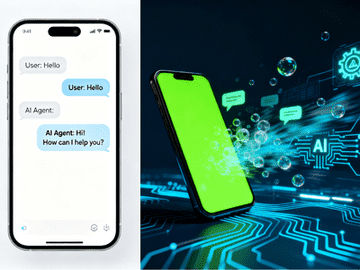
Poke removes the technical hurdles usually associated with advanced agentic AI platforms. Instead of navigating a complex dashboard, you simply interact with an AI assistant via SMS or your favorite messaging app. This approach allows the agent to handle daily planning, calendar management, and even photo editing through a thread you already use every day. By operating over standard messaging protocols, the service feels like a natural extension of your digital life. You can ask it to monitor your inbox for urgent messages or remind you to grab an umbrella based on the local forecast. This simplicity is the key to moving AI from a niche tool to a daily essential for the general public.
What makes Poke different from traditional AI chatbots
Most people are used to general-purpose chatbots that answer questions or write essays, but Poke is built for action. While a standard chatbot might tell you how to organize a schedule, this messaging based AI assistant actually updates your calendar for you. It functions as a proactive partner rather than a reactive search engine. For example, it can proactively alert you to sports scores or catch you up on the news without being prompted. Unlike many competitors, Poke is not tied to a single model; it uses real time AI inference to choose the best engine for each specific task. This flexibility ensures that users always get the most efficient result for their request.
How AI agents are becoming accessible via SMS and messaging apps
The move to SMS and iMessage is a strategic choice to meet users where they already spend their time. By utilizing solutions like Linq, Poke enables an AI assistant via SMS to live inside the apps people check dozens of times a day. This accessibility is a game-changer for those who find traditional AI software too daunting or time-consuming to manage. It brings the power of AI productivity tools to anyone with a phone number, regardless of their technical skill level. Even tasks like controlling smart home devices from companies like Sonos or Philips Hue can now be done via a quick text. This democratization of technology ensures that the benefits of automation are not restricted to the tech-savvy crowd.
Why Poke is gaining traction in the consumer AI space
Poke has quickly become a standout in the consumer AI automation sector, recently reaching a valuation of $300 million. Its popularity stems from its humanist approach, focusing on a personality that users actually enjoy interacting with. Investors from firms like Spark Capital and General Catalyst have taken notice of its rapid growth, which has increased tenfold in just a few months. The platform also allows users to write their own AI automation recipes in plain text and share them with others. This community-driven growth model helps the assistant become more useful every day as more people contribute. By focusing on growth and user experience over immediate profit, Poke is carving out a massive niche in the market.
How Poke compares with OpenAI and Meta AI ecosystems
In the current landscape, the OpenAI agent competition is fierce, with major labs fighting for dominance. However, Poke holds a unique advantage by remaining provider-agnostic, whereas Meta AI is often restricted to its own internal models. Furthermore, Meta AI ecosystem restrictions have sometimes barred chatbots from platforms like WhatsApp, creating a gap that Poke is working to fill. While big tech firms often try to lock users into their own walled gardens, Poke integrates with the tools you already use, like Gmail, Notion, and GitHub. This open approach allows it to act as a universal connector across different apps and services. It provides a level of freedom that is often missing from the ecosystems of larger corporations.
Why agentic AI adoption is accelerating among everyday users
We are seeing a massive spike in demand for systems that can do rather than just know. This shift toward agentic AI platforms is driven by a desire for extreme efficiency in a busy world. Every day users are realizing that AI task automation tools can save them hours of manual labor each week. Whether it is managing a busy family schedule or automating a professional workflow, the value proposition is clear. The ease of getting started, simply entering a phone number on a website, makes it incredibly easy for anyone to jump in. This frictionless adoption is why the number of people using these agents is growing so rapidly across all demographics.
How automation recipes are transforming personal productivity
The introduction of pre-made AI automation recipes has turned Poke into a versatile powerhouse for personal efficiency. These recipes are essentially blueprints that tell the AI agent via text messaging exactly how to handle specific categories like finance, travel, or wellness.
- Health and Wellness: Sync with devices like Oura or Fitbit to track your daily goals.
- Smart Home: Send a text to dim the lights or start your favorite playlist.
- Workplace Tools: Integrate with Slack, Linear, or Google Calendar to stay on top of tasks.
Custom Builds: Users can create their own recipes in plain English to solve unique personal problems. These tools allow for high-level AI workflow automation without requiring any coding knowledge from the user.
What this means for the future of AI-powered personal assistants
The success of Poke suggests that the future of AI agents will be integrated and incredibly proactive. We are moving toward a world where your personal AI assistant apps anticipate your needs before you even voice them. Imagine a system that automatically checks you into your flight and texts you the gate change before you even leave for the airport. This level of service was once reserved for the ultra-wealthy, but it is now becoming a standard digital utility. As real time AI inference becomes cheaper and faster, these assistants will become even more capable and responsive. The focus will continue to shift toward Humanist AI that prioritizes practical help and natural communication.
Long-term outlook for consumer AI agents and automation platforms
Looking ahead, the future of AI agents is likely to involve a total integration into every aspect of our digital lives. We can expect to see AI productivity tools that manage everything from our grocery lists to our long-term financial planning. As security models continue to improve, users will feel more comfortable giving agents limited access to their most important accounts.