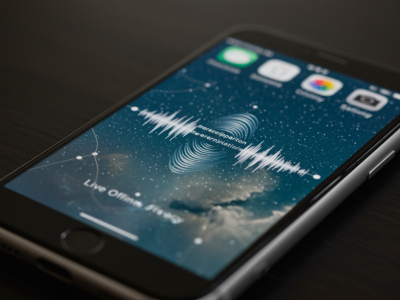

Google AI Edge Eloquent entered the spotlight this week as Google quietly released a new offline dictation app for iPhone users. Google AI Edge Eloquent focuses on clean and accurate speech-to-text without relying on the internet. The app reflects Google’s growing interest in practical AI tools for daily writing. Moreover, it positions the company against rising competitors in the voice recognition app space.
The offline dictation app works once users download Google’s Gemma ASR model. After setup, users can speak naturally and watch words appear instantly on screen. Live AI transcription updates in real time as people talk. When users pause speaking, the app removes filler words automatically. As a result, sentences look polished and ready for use. This approach helps professionals save time during note-taking or drafting messages.
Google AI Edge Eloquent also includes several AI text editing options. Users can select tools like key points, short summaries, or longer versions. These features allow quick rewrites without extra typing. The app supports clean transcription instead of raw speech capture. Therefore, it stands apart from basic AI dictation software that copies every spoken sound. Many professional transcription AI users may find this helpful.
Privacy controls form another key part of the app’s design. Users can disable cloud processing and rely only on on-device features. In that mode, the AI-powered transcription stays private on the phone. However, cloud mode allows deeper edits using Gemini models. Google also lets users import contact names or terms from Gmail. Custom words further improve accuracy in the voice-to-text app.
Amid this launch, Speech Recognition continues to expand steadily, as more companies now invest in automatic speech recognition for everyday use. Businesses clearly seek tools that work offline and protect data. Google’s move highlights a strategy focused on reliability and scale. This shift may push competitors to refine offline AI transcription features faster.
Although Google launched the app only on iOS, signs point to wider plans. The App Store page mentions an Android transcription app version in development. Google suggests future support as a system-wide keyboard on Android devices. That feature could enable quick dictation across all apps. Additionally, a floating dictation button may offer faster access for busy users.
Google AI Edge Eloquent also tracks user activity over time. The app displays word counts, speech speed, and session history. Users can search previous dictations easily. This data supports long-term writing improvement and productivity. Many iOS dictation tools lack such detailed insights. As a result, Google AI dictation may appeal to journalists, students, and business users alike.
The launch comes as speech-based tools grow more popular worldwide. Improved models now handle accents and everyday speech better. Google has tested similar tools before through cloud services. However, this release brings AI dictation directly to devices. Running locally reduces delays and improves reliability in weak network areas. That change could shape future AI-powered transcription tools.
In the United States, the impact could be significant. Many professionals rely on speech-to-text apps for work and study. Offline access may benefit users in travel-heavy or secure environments. Schools and offices may also adopt the app for faster documentation. Over time, wider U.S. use could follow as Android support arrives.
Google has not shared detailed performance numbers yet. However, the quiet launch suggests careful testing before broader promotion. If users respond well, similar features may appear across Google apps. Google AI Edge Eloquent already signals a shift toward smarter offline tools. With clear writing output and strong privacy options, the app may redefine how people dictate words into text.