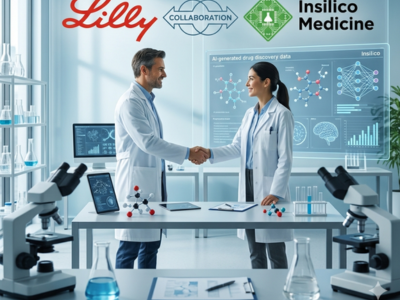

In a decisive move that underscores the rising importance of AI in pharmaceutical innovation, US drugmaker Eli Lilly has struck a strategic deal valued at up to $2.75 billion with Insilico Medicine, the AI‑driven biotech firm headquartered in Boston, Massachusetts. Under this landmark agreement, Lilly will gain exclusive rights to advance and commercialize a suite of AI‑developed drugs around the world, marking a major shift in how cutting‑edge therapies are discovered and brought to market.
The collaboration includes an upfront payment of $115 million to Insilico, with the remaining value tied to developmental, regulatory, and commercial milestones as well as future sales royalties. Lilly’s commitment highlights growing confidence within the pharmaceutical industry that artificial intelligence can accelerate drug discovery and reduce traditional bottlenecks in research and development.
According to company filings, Lilly will secure exclusive global rights to manufacture and distribute several preclinical oral drug candidates generated through Insilico’s AI platforms. These treatments, developed using advanced machine‑learning models, span multiple therapeutic areas and will be jointly advanced by both firms. If even a fraction of these candidates secure regulatory approval, the partnership could unlock significant value for both organizations.
Insilico’s CEO, Alex Zhavoronkov, noted that the AI‑enabled approach has already yielded at least 28 novel drug candidates, with nearly half progressing into clinical stages. Zhavoronkov said that the collaboration builds on longstanding ties between the two companies, which began with an AI software licensing agreement in 2023 and has since expanded into deeper research cooperation.
Industry analysts say the deal is one of the largest between a major pharmaceutical corporation and an AI biotech to date, signaling a profound shift toward computational methods in drug design and discovery. Unlike traditional processes that rely on lengthy laboratory work and iterative testing, AI‑developed drugs emerge from algorithms that can rapidly identify promising molecular structures and predict their behavior in biological systems.
“This collaboration allows us to explore novel mechanisms and accelerate the identification of promising therapeutic candidates across multiple disease areas,” stated Andrew Adams, Lilly’s group vice president of Molecule Discovery, in a company release. He added that combining Insilico’s generative AI technology with Lilly’s clinical development capabilities creates a powerful engine for innovation.
The strategic deal also reflects broader industry trends. Pharmaceutical companies worldwide are increasingly embracing artificial intelligence to boost R&D productivity, reduce costs, and improve the probability of success in clinical trials. Regulators, such as the US Food and Drug Administration, have also encouraged the use of AI and advanced modeling techniques as part of efforts to modernize drug research and potentially reduce reliance on animal testing.
Despite the enthusiasm, experts caution that AI‑developed drugs still face the same rigorous testing and regulatory scrutiny as conventional therapies. Machine‑generated candidates must demonstrate safety and effectiveness through extensive preclinical and clinical trials, a process that can span years and requires significant investment beyond computational design. Nevertheless, supporters argue that the upfront use of AI can substantially shorten discovery timelines and expand the range of viable therapeutic options.
Economists suggest the deal also has broader implications for global scientific leadership. With Insilico’s early‑stage work anchored in China and preclinical research conducted internationally, the alliance between Western biopharma and AI‑focused startups signals a new model of cross‑border collaboration. Lilly’s global commercial network will be critical in bringing these AI‑generated therapies to patients worldwide, potentially reshaping competitive dynamics in the pharmaceutical sector.
The partnership comes at a time when both companies are investing heavily in expanding their technological capabilities. Lilly’s Gateway Labs initiative aims to integrate digital and automated approaches into drug discovery, and Insilico’s generative AI platform has been recognized for its ability to design novel molecules at unprecedented speed. Together, they seek to bridge the gap between computational insights and clinical reality.
While the financial terms are contingent on future milestones, the upfront investment and long‑term framework reflect Lilly’s confidence in the potential of AI‑developed drugs. If successful, the collaboration could pave the way for more partnerships that blend artificial intelligence with traditional pharmaceutical expertise, accelerating the pace of medical innovation and expanding access to new therapies for patients around the world.
As the industry watches closely, stakeholders agree that this deal marks a pivotal moment in the evolution of drug discovery where machine intelligence and human ingenuity converge to address unmet medical needs.