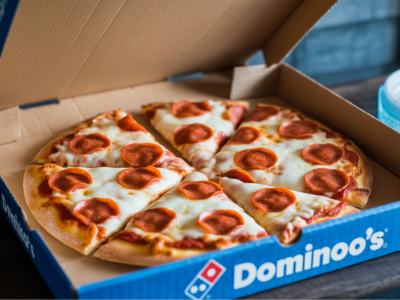

Domino's Pizza is currently navigating a competitive landscape with a bold new vision. Chief Executive Officer Russell Weiner believes the company can double its current retail business. This ambitious goal comes during a significant rough patch for its primary pizza rivals. While competitors face store closures and strategic reviews, Domino's is reporting stronger sales figures. The current Domino's business strategy focuses on high volume and value pricing to capture market share.
The company recently shared its fourth-quarter results for the fiscal year 2025. Revenue reached a total of $1.54 billion during this period. This figure surpassed the initial estimates set by Wall Street analysts. U.S. same-store sales grew by 3.7 percent throughout the final quarter. This growth occurred even as the broader pizza category faced economic headwinds. Domino's business strategy emphasizes traffic growth rather than simply raising prices for consumers.
Many restaurant chains currently rely on price hikes to drive their revenue growth. However, Domino's prefers to grow through higher transaction volumes from diverse diners. This approach appeals particularly to lower-income consumers who seek affordable food options. Russell Weiner refers to this operational strength as profit power for the brand. He argues that maintaining low prices helps grow the profitability of franchisees. By feeding more consumers at a lower price, the brand takes more share.
The competitive landscape currently provides a unique opening for the pizza giant. Major rivals like Pizza Hut and Papa John's are reportedly undergoing structural changes. Some industry rumors suggest these brands might even be available for sale soon. Meanwhile, Domino's business strategy involves aggressive physical expansion into new and existing markets. The company plans to add at least 175 net new stores in the U.S. during 2026. Furthermore, they aim for 800 new locations internationally within the same year.
Technological innovation also plays a critical role in the current Domino's business strategy. The brand continues to invest heavily in its proprietary digital ordering platforms. Approximately 85 percent of its total retail sales now come from digital channels. This digital focus creates a virtuous cycle with their revamped loyalty program. The new rewards system allows customers to earn free items much faster than before. Consequently, the brand can market directly to users without relying on third-party aggregators.
Nevertheless, the company does utilize partners like Uber Eats and DoorDash for incremental growth. These partnerships help reach new customers who do not typically use the Domino's app. This multi-channel approach is a cornerstone of the Domino's business strategy moving forward. The company aims for a $7 billion total sales increase over five years. About $3 billion of that growth will come from the domestic U.S. market.
Franchisee economics remain a top priority for the corporate leadership team. Management ensures that store operators remain profitable even while offering aggressive value deals. For example, the Best Deal Ever promotion successfully drove both order growth and profits. The company also uses a fortressing strategy to improve its delivery efficiency. By opening more stores in smaller areas, they reduce the delivery radius. This leads to hotter pizzas and much faster service for the local customers.
In conclusion, the pizza leader is pulling away from its struggling competition. Its focus on volume, value, and technology provides a sustainable path for expansion. While other brands retreat, Domino's business strategy remains firmly focused on aggressive long-term growth. The CEO is confident that doubling the business is not a stretch. Given their track record, the brand seems poised to dominate the global pizza market. Investors have responded positively to these plans as the company's stock recently climbed.
The successful execution of the Hungry for MORE plan will define the next decade. If the current momentum continues, the brand will reach its 8,500-store target easily. The gap between Domino's and its rivals continues to widen every single quarter. This strategic discipline ensures the company remains the top choice for hungry consumers.