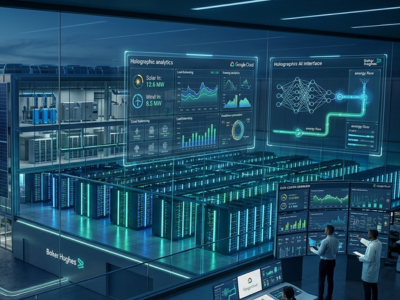

The rise of AI Driven Power Optimization marks a critical turning point for global data centers as energy demand surges at an unprecedented pace. With AI workloads expanding rapidly across cloud platforms, operators are under increasing pressure to reduce energy waste and improve sustainability. The recent collaboration between Baker Hughes and Google Cloud reflects this urgency. It introduces a new pathway for efficient power management through advanced digital intelligence and deep energy expertise.
In this blog, we will explore how AI Driven Power Optimization is transforming modern data centers, why energy demand is rising, and how industry collaborations are shaping a more sustainable future for digital infrastructure. This joint effort signals a broader industry shift toward smarter, cleaner, and more resilient data center infrastructure. As AI adoption accelerates, energy optimization is no longer a secondary goal. It has become central to long-term operational success.
Why Data Center Power Demand Is Skyrocketing
As more companies use AI, data centers are using much more energy. Training large models, running cloud applications, and expanding facilities all put a lot of pressure on current systems. Data centers now have to handle constant, heavy workloads and still stay reliable. Servers, cooling, and backup systems all need a lot of power. This change shows why data centers urgently need AI for power management. Operators need smart systems to keep things stable and efficient. There’s also more demand for sustainable solutions that meet higher energy needs without harming the environment. This rapid increase in energy demand is a global challenge, but its impact is particularly pronounced in major digital economies. In the United States, where AI adoption and large-scale data center expansion are accelerating quickly, rising electricity consumption is beginning to place significant strain on existing power infrastructure.
How AI Partnerships Impact American Infrastructure
The United States is experiencing one of the sharpest rises in electricity demand in decades, driven heavily by rapid AI adoption and accelerated data center growth. According to the U.S. Department of Energy, national electricity demand may grow 15–20% over the next decade, reversing years of flat consumption as AI, cloud computing and digital manufacturing expand across the country. Data centers alone consumed 4% of total U.S. electricity in 2023, and that share could climb to as much as 9% of national generation by 2030, highlighting their growing strain on American power systems.
This surge creates acute pressure on regional grids, particularly in fast‑growing AI hubs where large facilities require continuous, firm power and have limited geographic flexibility. DOE notes that data center demand is rising rapidly and varies by region, often creating steep load increases that directly impact grid reliability. AI‑Driven Power Optimization partnerships, such as Baker Hughes and Google Cloud, offer a timely solution. Their combined energy expertise and AI capabilities can stabilize consumption, enhance efficiency, reduce grid burden, and support clean‑energy transitions, critical benefits as the U.S. faces mounting sustainability and reliability challenges.
How Baker Hughes and Google Cloud Combine Industrial Energy Expertise
This partnership combines the strengths of both companies to tackle a tough industry challenge. Baker Hughes brings over 100 years of experience in industrial energy systems, including advanced machinery and power technology. Google Cloud adds its expertise in AI and large-scale digital infrastructure. Together, they aim to deliver AI Driven Power Optimization on a large scale. Their approach gives real-time insights, helps predict energy needs, and makes systems more reliable. This partnership puts both companies at the leading edge of sustainable data center innovation. It shows how mixing industrial know-how with digital intelligence can create strong solutions for today’s infrastructure.
What AI‑Enabled Power Management Systems Are
AI-powered systems use smart software to check real-time conditions in data centers. They constantly track how power is made, used, and how equipment is working. By looking at lots of data, these systems find ways to save energy and cut waste. Predictive analytics helps operators plan for energy needs based on workloads, weather, and system performance. Smart load balancing also helps servers and cooling systems run efficiently as conditions change. Real-time optimization lets operators adjust power use right away, which keeps the grid stable and protects equipment. This approach supports AI-powered efficiency in cloud computing and helps keep performance high while using less energy.
How Data Centers Can Reduce Carbon Emissions
AI is key to making data centers cleaner. With better monitoring, smart predictions, and improved equipment, data centers can lower their carbon footprint by a lot.
Key advantages include:
- Lower energy waste during peak workloads
- Improved integration of renewable sources
- Reduced strain on aging power systems
- Longer asset life due to optimized operation
These improvements support global commitments to reduce emissions while addressing rising sustainability expectations. AI‑Driven Power Optimization offers a measurable path to meeting environmental goals without sacrificing performance.
What Challenges Data Centers Face in Managing Energy Consumption
Despite technological advancements, data centers face several challenges as energy demand continues to rise. Increasing electricity costs are putting pressure on operational budgets. Grid limitations are restricting expansion in high-demand regions. Operators must also manage unpredictable workload spikes while maintaining consistent performance. Cooling requirements add further complexity, as higher server density increases thermal management demands. These issues show why smart energy management is so important. AI-powered solutions are needed to make operations simpler and more efficient as data centers grow.
Future of AI‑Driven Power Optimization
AI Driven Power Optimization is becoming a key part of future data centers. As these facilities grow, operators will depend more on smart systems to manage energy well. New innovations will likely bring self-managing energy systems, better use of renewable energy, and closer links between data centers and smart grids. These advancements will create more efficient, resilient, and sustainable digital infrastructure. The future of data centers will be defined by systems that are not only powerful but also intelligent and energy-aware.
The collaboration between Baker Hughes and Google Cloud highlights a broader transformation. Data centers are evolving into intelligent ecosystems where power is continuously optimized through real-time insights. Looking ahead, AI Driven Power Optimization will redefine how infrastructure is designed and operated. Facilities will become more autonomous, more efficient, and better aligned with global sustainability goals. Organizations that embrace this shift today will lead the next generation of digital infrastructure